
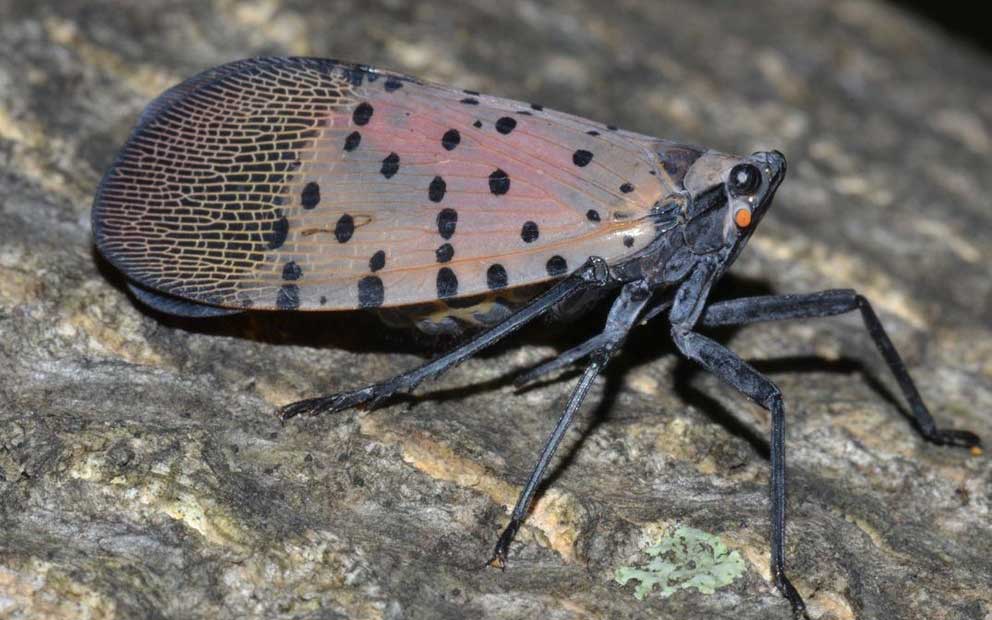
Spotted Lanternfly, a wonderful name for a very attractive flying insect. However, the wonder of this pest ends at its name. This is a new invasive insect first detected in Pennsylvania in 2014.
The Spotted Lanternfly is native to China and is in the planthopper family. As with all planthoppers, the Spotted Lanternfly is what is known as a piercing and sucking insect similar to aphids. This means the insect feeds through the use of an appendage known as a proboscis which is straw-like and is inserted into the plant to suck out the fluids.
Through this process, the insect excretes a substance known as honeydew which is high in sugar content. As this honeydew is excreted it accumulates on anything under the insect and causes a sticky mess. Soon after the honeydew accumulates a mold begins to grow. This mold is known as Sooty Mold because it is black and looks like fire soot.
In addition to the honeydew, the Spotted Lanternfly can cause damage to the tree through its feeding. This feeding can weaken the plant opening it up to more invasion from other pests. The Spotted Lanternfly also has an affinity for grapes and other fruit, causing considerable damage to plants and fruit.
The Spotted Lantern Fly population can rapidly grow and an affected tree can be covered with large numbers of this insect. The pest has what is known as incomplete metamorphosis which means the insect goes through a series of nymph stages before becoming a winged adult. All life stages can be present at the same time. As a result of the population size, voracious appetite of the insects, and the accompanying accumulation of honeydew they can cause a huge mess.
Where is This Insect Now and Is It Spreading?
Currently, there is a known population near Winchester, Virginia. This insect is winged and capable of flying some distance, they also lay eggs on hard surfaces such as trees, walls, and vehicles. It’s the latter which can be a mode of transportation for the insect to new areas. In addition, the Spotted Lanternfly has a wide range of plants upon which it will feed. Their primary host tree is the Ailanthus or Tree Of Heaven but the will feed on many hardwood trees, grapes, and hops.
Once again, it is important to be vigilant and be on the look for this pest to prevent its movement. Big O Tree and Lawn Service is on the front line constantly monitoring for this and other invasive pests in our area. We can help you with identifying this pest as we are committed to providing the best, most up to date control for landscape pests. We do our part in slowing the spread of these invasive pests. Please contact us if you see anything you can’t identify or if you have any plant health care needs.