
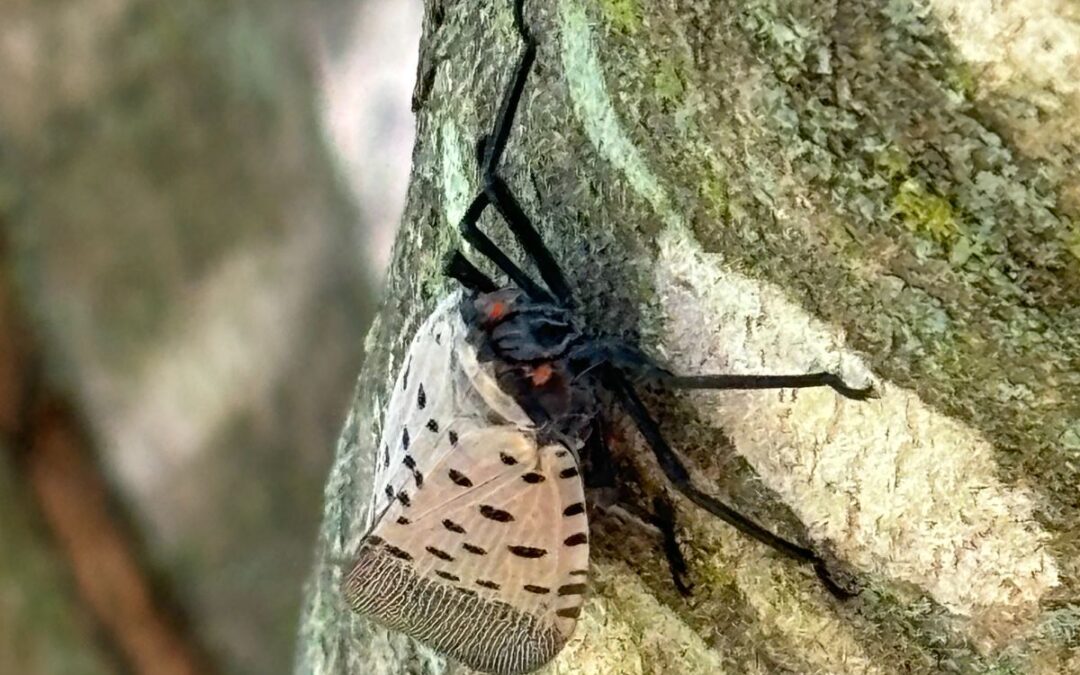
The Spotted Lantern Fly is the newest non-native invasive insect to affect the Shenandoah Valley. This pest was first introduced into the US from China in Pennsylvania in 2012. It has quickly spread through the Mid-Atlantic and north east. This pest was first found in Virginia in Winchester in 2018 and has now spread down the Shenandoah Valley. The pest has been found in Harrisonburg, Waynesboro, Fishersville, Crozet, Ivy and the surrounding areas. There have been numerous sightings of the adult SLF throughout the area.
At this time, the adult Spotted Lantern Fly is in the active life stage. The adult is now laying eggs which will overwinter and begin hatching in May. The first stage or instar, is a small black insect with white spots. After three moltings the fourth instar emerges in around July and August. This is when the pest is larger and red in color with white spots. The final molt is into the adult which can appear from August through November. This pest often has one generation per year but can quickly spread.
What Can You Do Now?
At this time of year, inspect your trees for the adult Spotted Lantern Fly, which is a grey, black and red insect about one inch long. Kill any you see! In addition, inspect trees, decks, any solid surface for the grey egg mass, if you see any scrape it off and destroy it. The primary host of the SLF is the Ailanthus tree (Tree of Heaven) but it also infests maples, walnuts, grapes and many other plants. If you have a Silver Maple or Red Maple be especially vigilant in looking for this pest. Fortunately, there are effective treatments for this pest and we are ready to treat your trees. Contact us today for a free estimate!

Learn More about the Spotted Lantern Fly
The Spotted Lanternfly is the newest invasive pest to spread in Rockingham, Augusta, and Albemarle Counties. We are seeing a regular introduction of non-native, invasive species which are causing great damage. This new kid on the block is the Spotted Lantern Fly (SLF) Lycorna delicatula.